Astrophotography forecast and planner
Check the clouds and the Moon for your location, see which nights are worth going out, and find targets that suit your lens or telescope and filter.
Astrophotography forecast
Showing an example location. Set yours
Cherry Springs State Park, PA
41.663°, -77.824° · America/New York
The next 16 nights
Dark sky outlook for the next four months
Weather forecasts only go out about two weeks, so this chart is based on the Moon. Taller gold bars mean more dark hours with the Moon down at Cherry Springs State Park. Click any night to see its Moon times and targets.
Best targets for Tonight
Targets that get high in the sky from your location during dark hours, ranked for your focal length and filter.
More tools
Find a dark site, look up a target in the sky map, or stack and process your photos.
- Sky mapStellarium Web, a live planetarium for your location. Use it to find a target and see when it rises.Open
- Light pollution mapThe Light Pollution Atlas, for finding dark sky sites near you from satellite data.Open
- Image processingAstroBake, a free app that stacks and processes your raw deep-sky photos into a finished image.Open
- Filter guideWhich filter to use for each kind of target, and when you are better off without one.Open
Rigs and photos from the community
See what people are shooting and the gear they used. You can post your own rig and photos on RigDesigner.
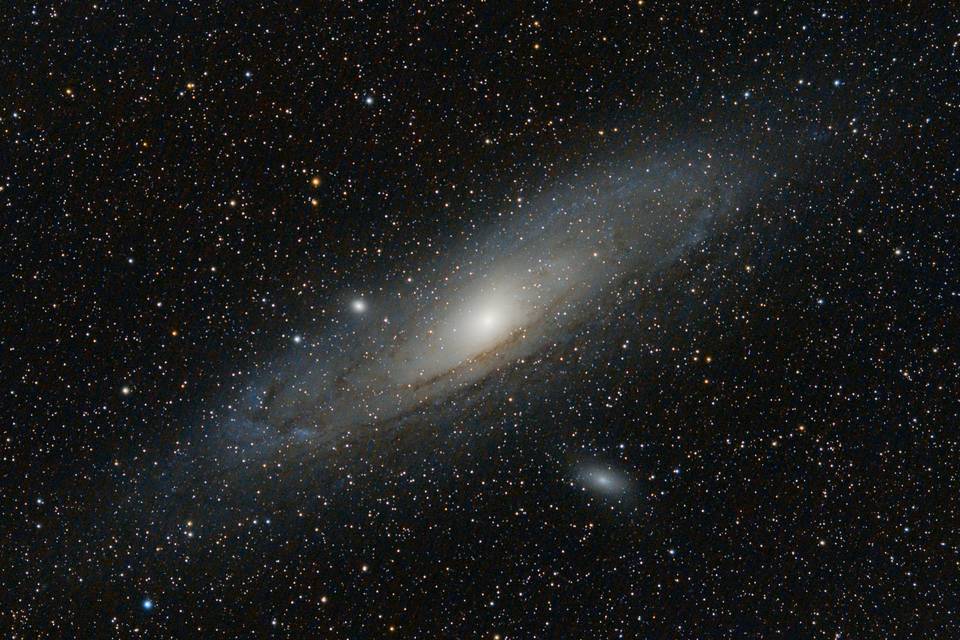
Photographing the Andromeda Galaxy with a Sony a6700 and Apertura 60mm telescope
The Andromeda Galaxy (M31) through an Apertura 60mm doublet APO refractor and a Sony a6700.

Photographing the Orion Nebula with an Apertura 60mm refractor
The Orion Nebula with an Apertura 60mm doublet APO refractor on a Star Adventurer GTI mount.
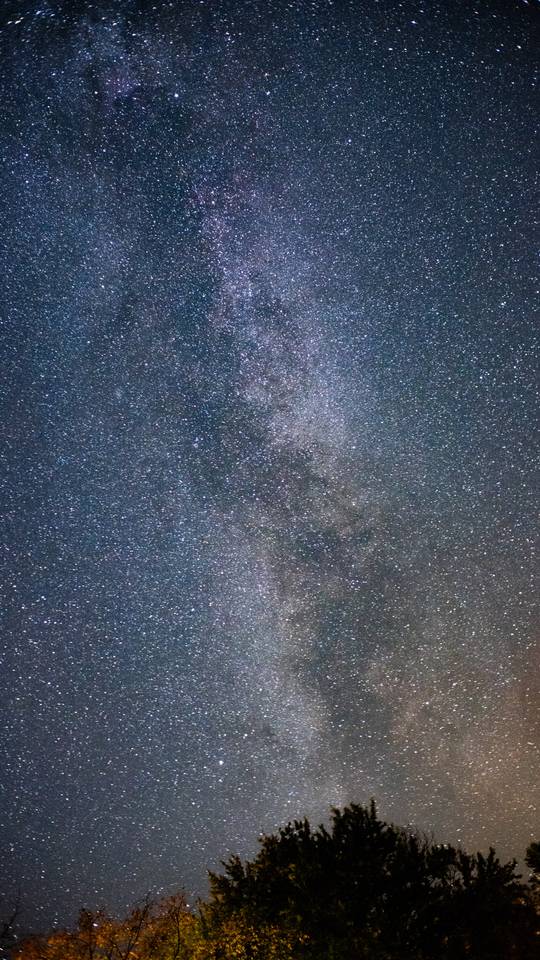
Went to New Hampshire for the weekend and finally took some Milky Way shots
Milky Way shots from a field near North Conway, taken with a Sony a7 II and a 7Artisans 35mm f/1.4 lens.
How the forecast works
Weather data comes from Open-Meteo. Sun, Moon and target positions are worked out in your browser. Your location is saved on your device and is only sent to the weather service to get the forecast.
What makes a good night for astrophotography?
Clear skies come first. After that the Moon matters most, because a bright Moon above the horizon lights up the whole sky and washes out faint galaxies and dust. Low humidity, little wind and a site away from city lights all help too.
How is the astrophotography score calculated?
Every 10 minutes between astronomical dusk and dawn gets a quality value from the forecast cloud cover and the Moon’s brightness while it is above the horizon. The night’s score is the average, reduced for short summer nights and strong wind. The broadband score suits galaxies, clusters and unfiltered imaging. The narrowband score assumes a dual-band or narrowband filter, which blocks most moonlight.
When is the best time of month for astrophotography?
The week or so around new Moon, when the Moon is down or is a thin crescent that sets early. Around first quarter the Moon sets near midnight, so the second half of the night is dark. Around last quarter it rises near midnight, so the evening is dark. The outlook chart shows how many Moon-free hours each night has.
Can I do astrophotography with the Moon up?
Yes, if you pick the right targets. Emission nebulae such as the Orion, Rosette, North America and Heart nebulae glow in a few narrow wavelengths. A dual-band or narrowband filter lets that light through and blocks most of the moonlight. Bright star clusters, the Moon and the planets also work. Galaxies and reflection nebulae need a dark, moonless sky.
How far ahead is the forecast?
Hourly cloud, humidity and wind forecasts come from Open-Meteo and go out 16 days. Moon phase, moonrise, moonset and darkness times are calculated, so the outlook covers the next four months. You can open any of those nights to see its targets.
What is astronomical darkness?
It is when the Sun is more than 18° below the horizon and adds no light to the sky. This is the best time for faint deep-sky objects. Near the summer solstice at high latitudes the Sun never gets that low, so the planner uses nautical darkness (12° below) instead.