How to photograph the Milky Way Core (Galactic Center)
The bright center of our galaxy and the usual subject of Milky Way landscape photos.
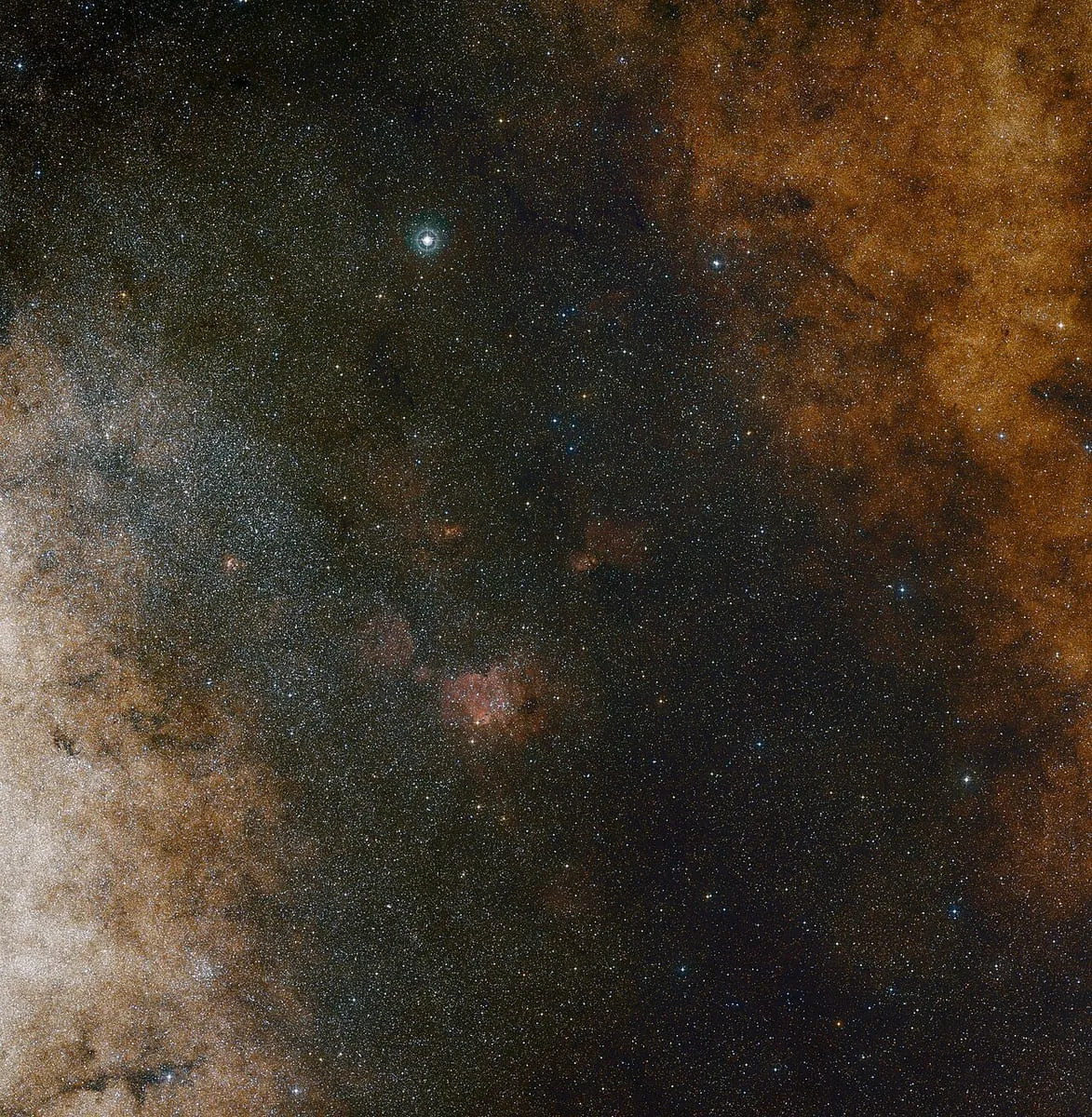
Photo byESO and Digitized Sky Survey 2, Davide De Martin and S. Guisard(CC BY 4.0)
When to shoot it from your location
About the Milky Way Core
The galactic core is the brightest part of the Milky Way. In the Northern Hemisphere it is visible from late winter mornings through early fall evenings.
Gear and framing
The Milky Way Core spans about 30° of sky. It frames best with:
- Wide lens (14-50mm on a camera)
You can see how other people have built their rigs on RigDesigner, including my Sony a6700 and 60mm refractor rig.
Filters
This is a broadband target, which means its light is mostly starlight across the whole spectrum. Shoot it with no filter or a UV/IR cut filter. A broadband light pollution filter can help a little in the suburbs. Dual-band and narrowband filters block most of its light, so leave them off. Plan it for a moonless night at a dark site.
Tips
- Use a fast wide lens (14-35mm at f/1.4-f/2.8) and keep single exposures short enough to avoid trailing, around 500 divided by your full-frame-equivalent focal length in seconds.
- Go on a moonless night to the darkest site you can reach. Check the light pollution map before you drive.
- Stack 10-20 sky frames to cut noise, and shoot a separate foreground.
Processing
Stack your light frames with darks and flats, then remove the background gradient before stretching. AstroBake does all of this for you. Point it at your folders of raw frames, then adjust the result with live sliders.
Community shots of the Milky Way Core
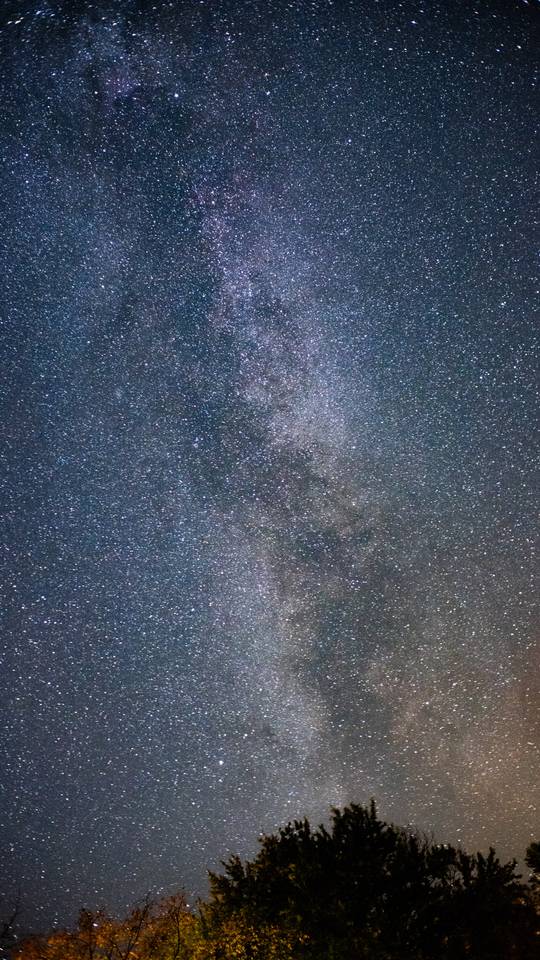
Went to New Hampshire for the weekend and finally took some Milky Way shots
Milky Way shots from a field near North Conway, taken with a Sony a7 II and a 7Artisans 35mm f/1.4 lens.