How to photograph the Andromeda Galaxy (M31)
The nearest large spiral galaxy and a common first deep-sky target.
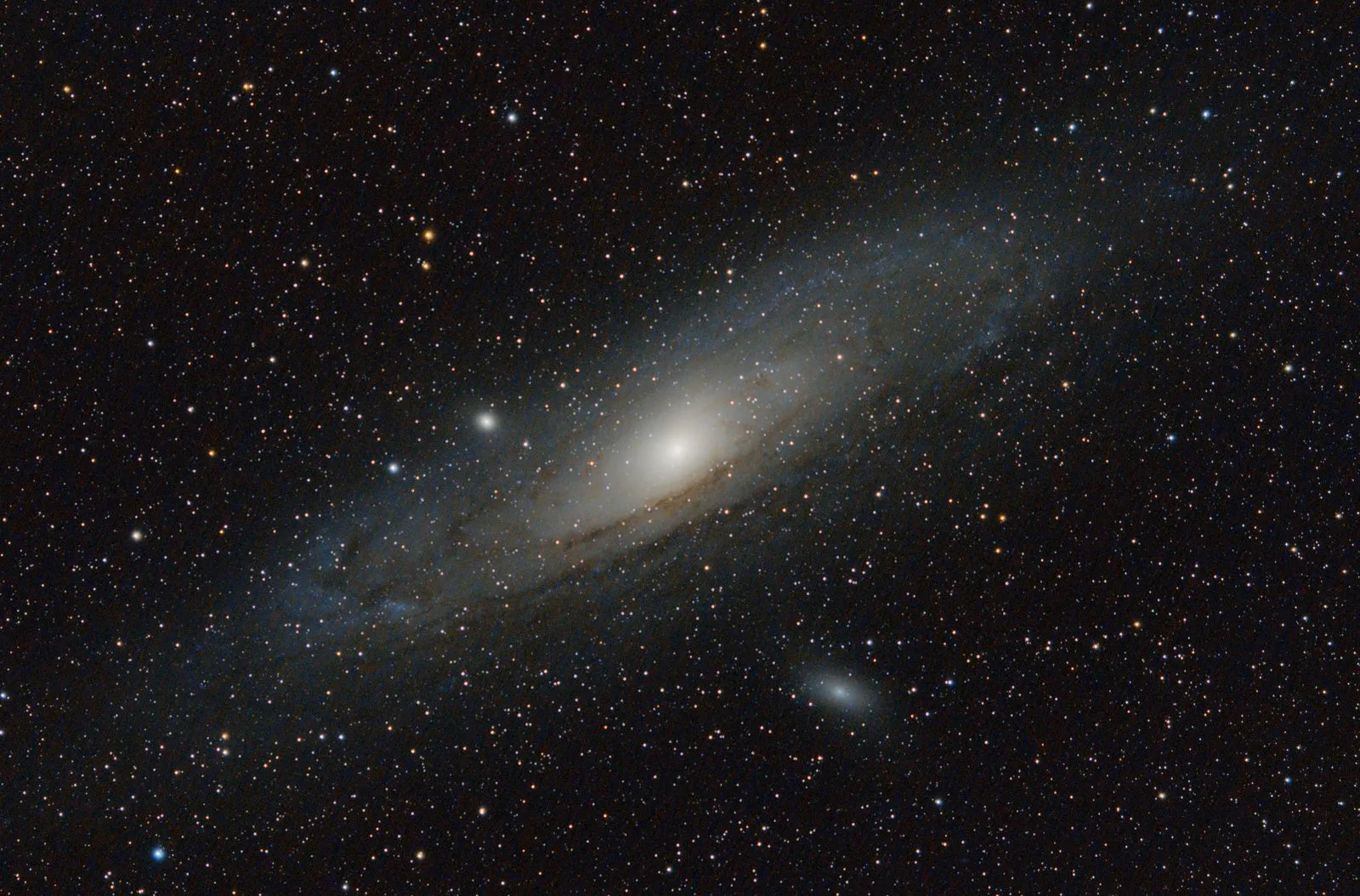
Photo byCam Downey(Processed with AstroBake)
When to shoot it from your location
About the Andromeda Galaxy
Andromeda spans about six full Moons across the sky, so it fits a 200-400mm lens or a small refractor well. A single short exposure shows the bright core, and stacking an hour or more brings out the dust lanes and the companion galaxies M32 and M110.
Gear and framing
The Andromeda Galaxy spans about 3.2° of sky. It frames best with:
- Telephoto (85-300mm lens)
- Small refractor (250-600mm)
You can see how other people have built their rigs on RigDesigner, including my Sony a6700 and 60mm refractor rig.
Filters
This is a broadband target, which means its light is mostly starlight across the whole spectrum. Shoot it with no filter or a UV/IR cut filter. A broadband light pollution filter can help a little in the suburbs. Dual-band and narrowband filters block most of its light, so leave them off. Plan it for a moonless night at a dark site.
Tips
- Leave narrowband and dual-band filters off. Galaxies are made of starlight, and those filters block most of it.
- It is big and bright enough for a suburban sky. A moonless night will show more of the outer arms.
- Aim for 60-120 minutes of total exposure, then stretch gently to keep the core from blowing out.
Processing
Stack your light frames with darks and flats, then remove the background gradient before stretching. AstroBake does all of this for you. Point it at your folders of raw frames, then adjust the result with live sliders.
Community shots of the Andromeda Galaxy
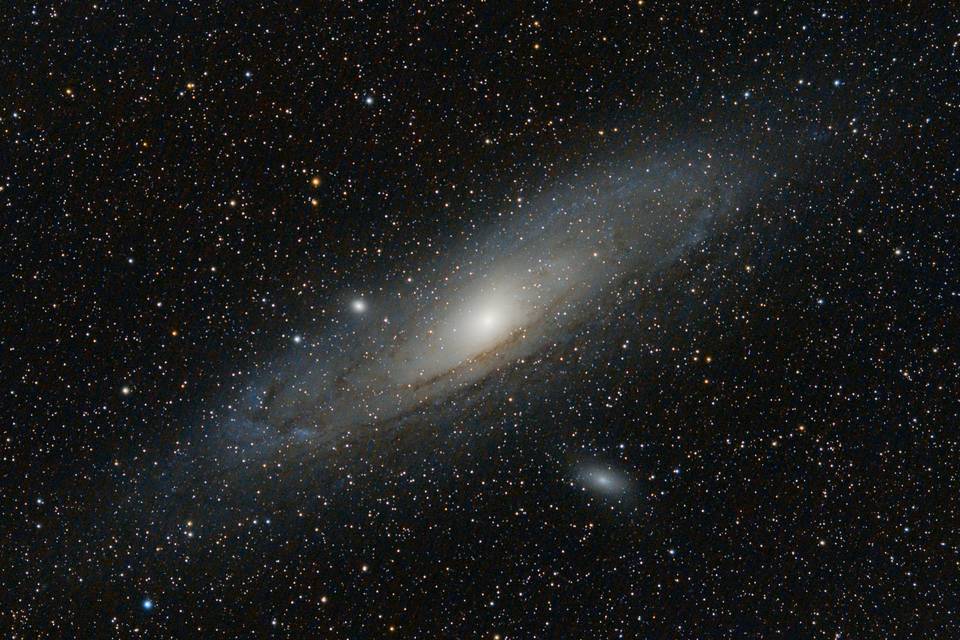
Photographing the Andromeda Galaxy with a Sony a6700 and Apertura 60mm telescope
The Andromeda Galaxy (M31) through an Apertura 60mm doublet APO refractor and a Sony a6700.