How to photograph the Messier 78 (M78)
The brightest reflection nebula in the sky, with dark dust all around.
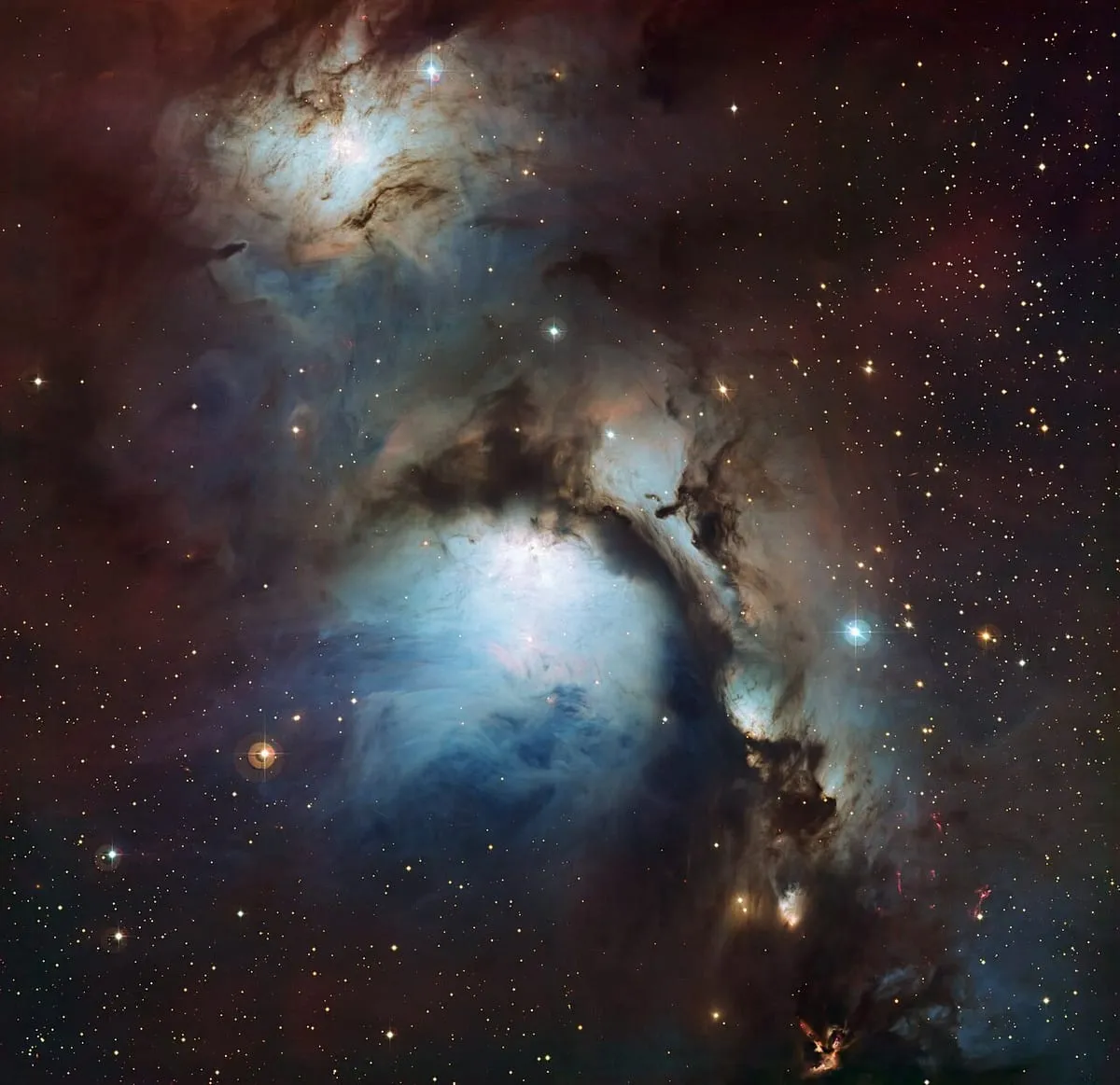
Photo byESO/Igor Chekalin(CC BY 4.0)
When to shoot it from your location
About the Messier 78
M78 glows blue from starlight reflecting off dust in the Orion molecular cloud. Deep, unfiltered exposures reveal the dark lanes and faint McNeil’s Nebula nearby.
Gear and framing
The Messier 78 spans about 8′ of sky. It frames best with:
- Small refractor (250-600mm)
- Long focal length (800mm and up)
You can see how other people have built their rigs on RigDesigner, including my Sony a6700 and 60mm refractor rig.
Filters
This is a broadband target, which means its light is mostly starlight across the whole spectrum. Shoot it with no filter or a UV/IR cut filter. A broadband light pollution filter can help a little in the suburbs. Dual-band and narrowband filters block most of its light, so leave them off. Plan it for a moonless night at a dark site.
Tips
- Shoot it unfiltered on a moonless night.
Processing
Stack your light frames with darks and flats, then remove the background gradient before stretching. AstroBake does all of this for you. Point it at your folders of raw frames, then adjust the result with live sliders.