How to photograph the Dumbbell Nebula (M27)
The brightest planetary nebula, glowing teal and red.
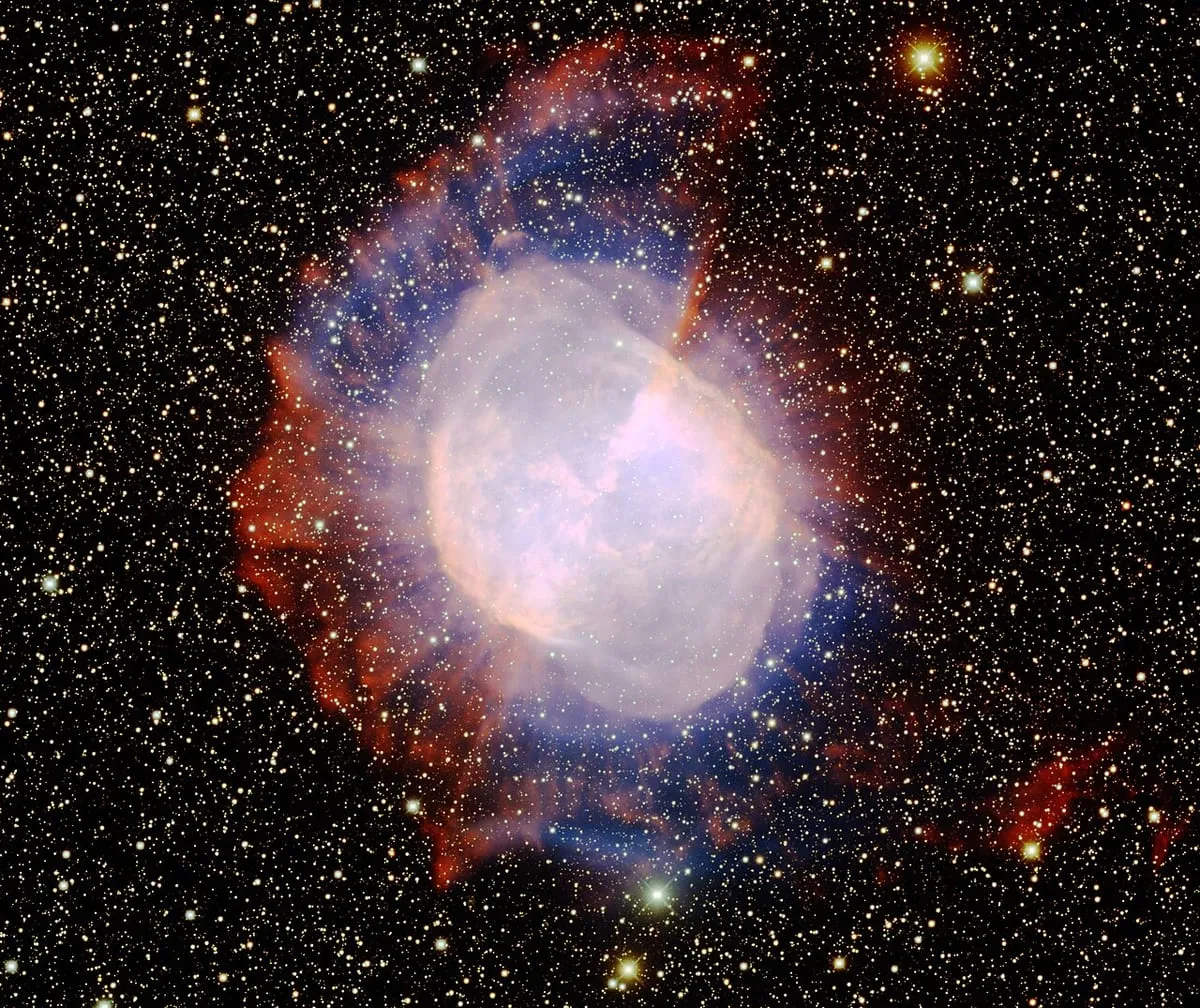
Photo byT.A. Rector (University of Alaska Anchorage) and H. Schweiker (WIYN and NOIRLab/NSF/AURA)(CC BY 4.0)
When to shoot it from your location
About the Dumbbell Nebula
M27 is the gas shell of a dying Sun-like star. It is bright in both hydrogen-alpha and oxygen-III, so a dual-band filter captures it well even with the Moon up.
Gear and framing
The Dumbbell Nebula spans about 8′ of sky. It frames best with:
- Small refractor (250-600mm)
- Long focal length (800mm and up)
You can see how other people have built their rigs on RigDesigner, including my Sony a6700 and 60mm refractor rig.
Filters
This target glows in hydrogen-alpha and oxygen-III light. A dual-band filter, or separate narrowband filters with a mono camera, lets that light through and blocks most light pollution and moonlight. It is a good choice for city skies and for nights with the Moon up.
Tips
- It is small. 600mm and up shows the shell well, and a small refractor still gives a nice cropped result.
- Long integration reveals the faint outer halo beyond the bright “apple core”.
Processing
Stack your light frames with darks and flats, then remove the background gradient before stretching. AstroBake does all of this for you. Point it at your folders of raw frames, then adjust the result with live sliders.