How to photograph the Crescent Nebula (NGC 6888)
A bubble blown by a Wolf-Rayet star, wrapped in a faint oxygen shell.
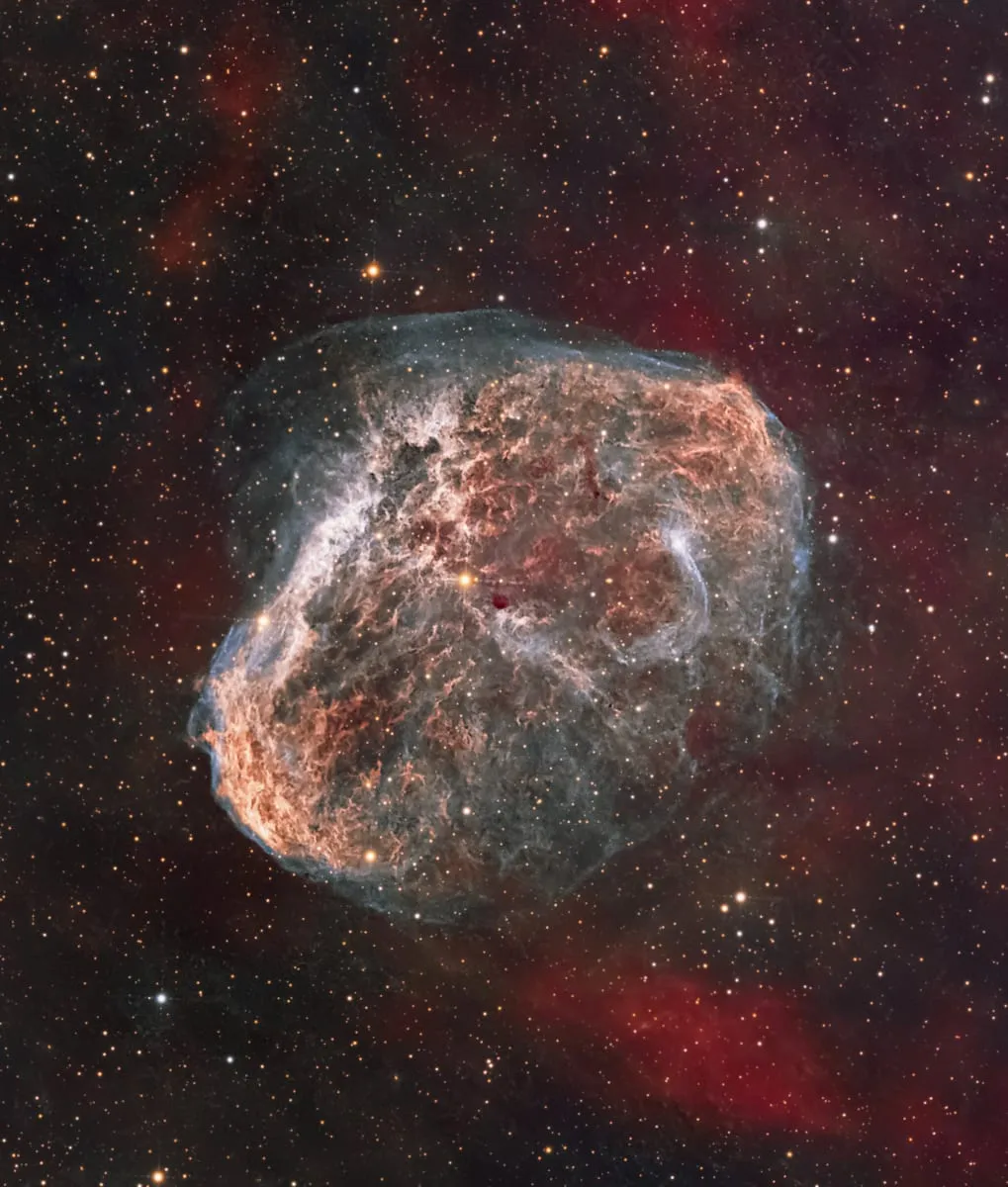
Photo byChuck Ayoub(CC0)
When to shoot it from your location
About the Crescent Nebula
The Crescent’s red inner shell is easy to capture. Its faint teal oxygen-III outer shell takes many hours of narrowband data, so plan it as a project over several summer nights.
Gear and framing
The Crescent Nebula spans about 18′ of sky. It frames best with:
- Small refractor (250-600mm)
- Long focal length (800mm and up)
You can see how other people have built their rigs on RigDesigner, including my Sony a6700 and 60mm refractor rig.
Filters
This target glows in hydrogen-alpha and oxygen-III light. A dual-band filter, or separate narrowband filters with a mono camera, lets that light through and blocks most light pollution and moonlight. It is a good choice for city skies and for nights with the Moon up.
Tips
- Collect several hours with a dual-band filter to reveal the outer oxygen-III shell.
Processing
Stack your light frames with darks and flats, then remove the background gradient before stretching. AstroBake does all of this for you. Point it at your folders of raw frames, then adjust the result with live sliders.