How to photograph the Messier 3 (M3)
A bright spring globular cluster with hundreds of thousands of stars.
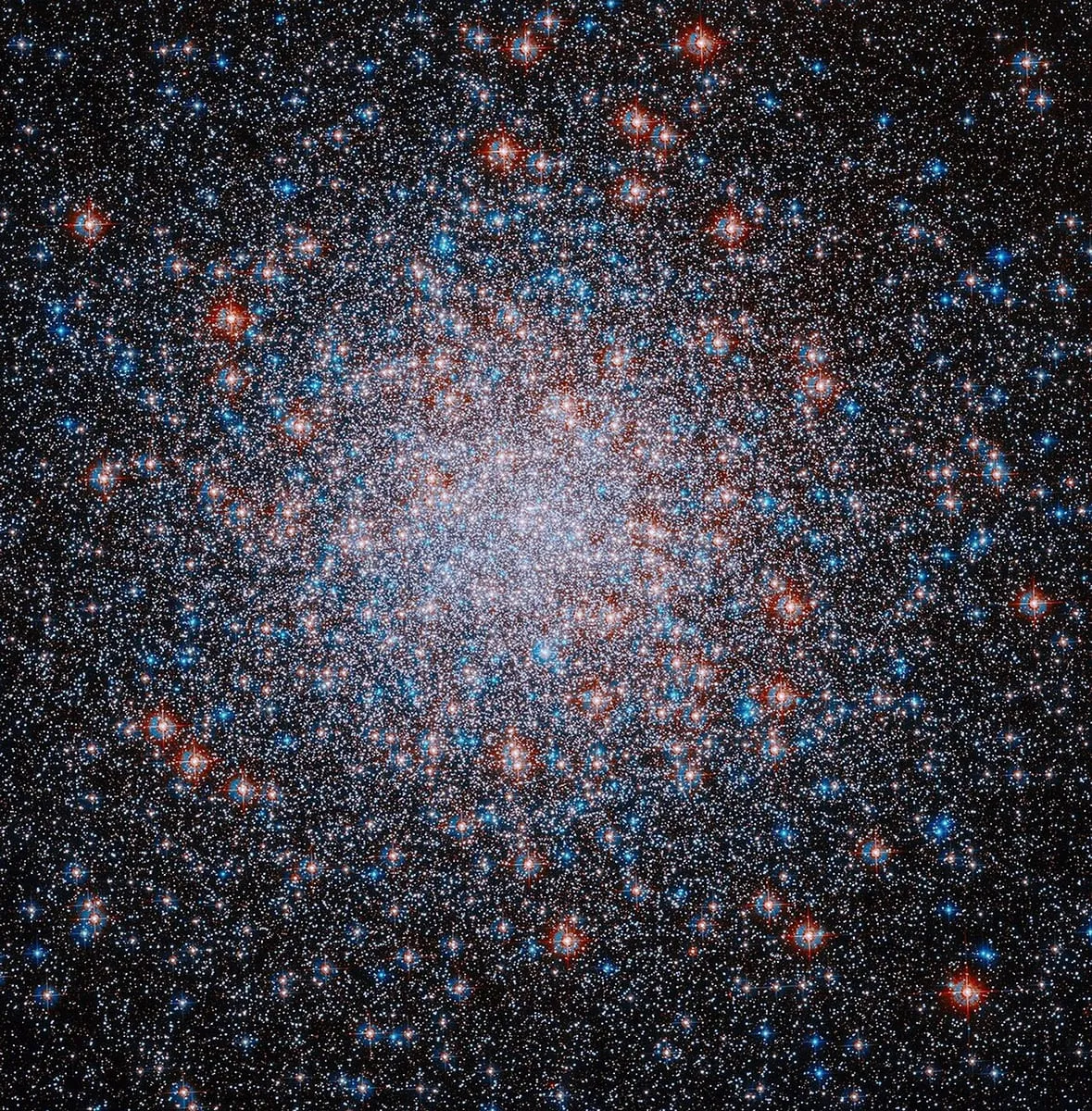
Photo byNASA, ESA and A. Sarajedini (Florida Atlantic University)(Public domain)
When to shoot it from your location
About the Messier 3
M3 is a rich, bright globular that handles moonlight well. It is a good spring alternative to M13.
Gear and framing
The Messier 3 spans about 18′ of sky. It frames best with:
- Small refractor (250-600mm)
- Long focal length (800mm and up)
You can see how other people have built their rigs on RigDesigner, including my Sony a6700 and 60mm refractor rig.
Filters
This is a broadband target, which means its light is mostly starlight across the whole spectrum. Shoot it with no filter or a UV/IR cut filter. A broadband light pollution filter can help a little in the suburbs. Dual-band and narrowband filters block most of its light, so leave them off. Plan it for a moonless night at a dark site.
Tips
- Use it on moonlit spring nights when galaxies are out of reach.
Processing
Stack your light frames with darks and flats, then remove the background gradient before stretching. AstroBake does all of this for you. Point it at your folders of raw frames, then adjust the result with live sliders.